
At a Graveside
An ode to St. Søren

“In a little while,
I shall have won,
Then the entire battle
Will disappear at once.Then I may rest
In halls of roses
And unceasingly
And unceasingly
Speak with my Jesus.”1
It’s very easy to always say too much on sad occasions. A tasteful epitaph or eulogy can quickly turn into an aesthetic display of excess, an exercise in the self that totalises the audience and the other—stealing from both the choice to grieve and possibility to be grieved over. Without the ability to “hold one’s self back”2, it becomes impossible to grieve, impossible to reflect, impossible to think at all—indeed, life becomes trapped in chatter and prattle, like the invocations of the ancient pagans for either binding souls to the earth or to expel them from immediacy as quickly as possible.
In that sense, remembering dear Søren on the anniversary of his death is an event which should be marked by what he preferred: silence. A time for reflection and a time where reflection gives way to repetition, to life itself.
“But what does this silence express? It expresses respect for God, for the fact that it is he who rules and he alone to whom wisdom and understanding belong. And just because this silence is respect for God, is worship—as it can be in nature—this silence is so solemn.”3
“Goldschmidt recognized sagaciously that [S. K.] died opportunely at the moment when his attack upon the Established Church had made him again a popular figure, for the last thing he could endure was popularity.”4
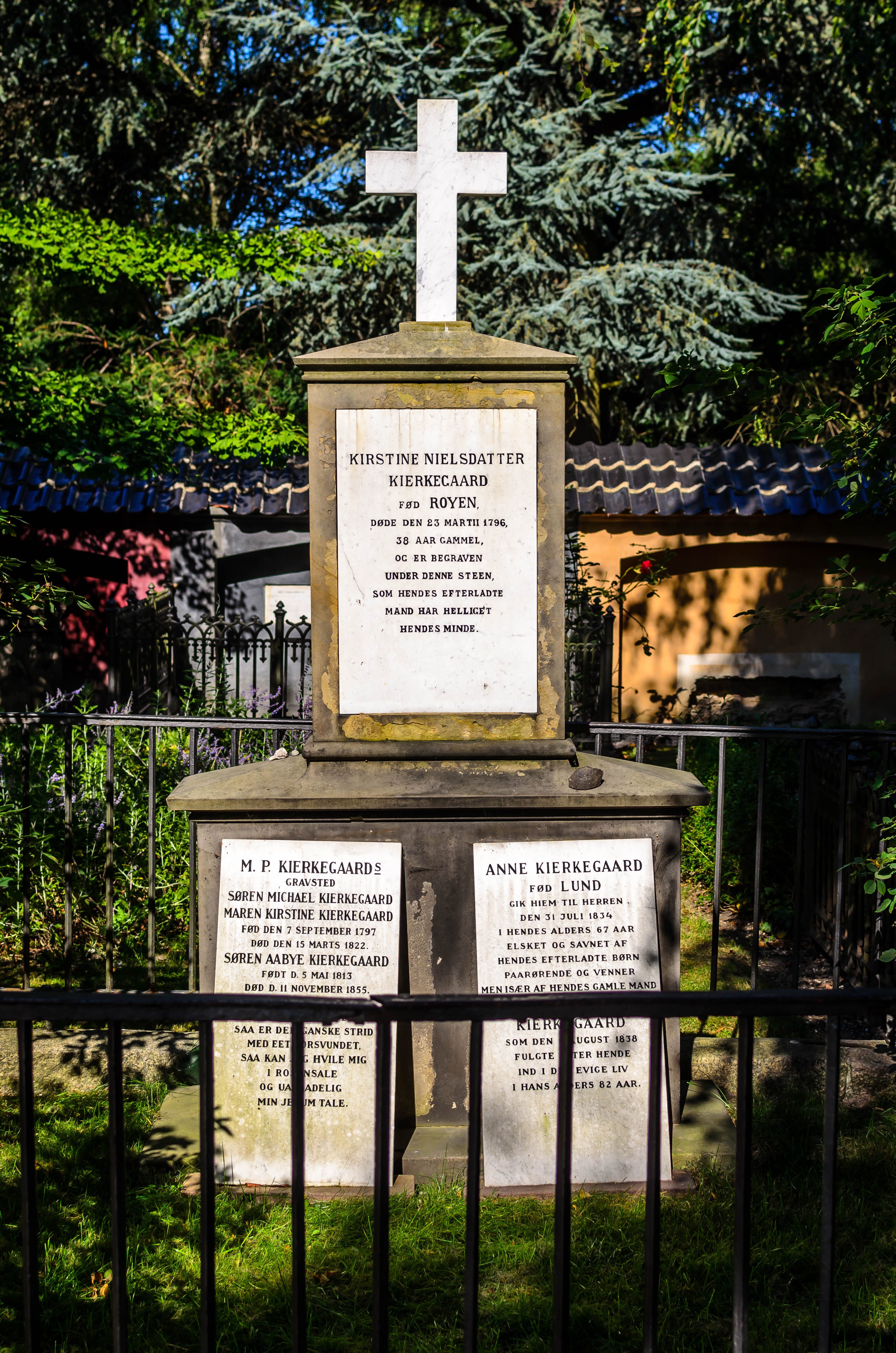
The epitaph on S. K.’s grave—referenced in Kierkegaard and the Common Man, l. 1697, J. K. Bukdahl
[At holde igjen paa sig selv]. Concluding Unscientific Postscript to the Philosophical Fragments: A Mimic-Pathetic-Dialectic Composition - An Existential Contribution, p. 165, [J. Climacus]
The Lily of the Field and the Bird of the Air, p. 29, S. Kierkegaard
For Self-Examination and Judge For Yourselves! and Three Discourses (1851), p. 48n, S. Kierkegaard
I got to visit the cemetery. A quiet Saturday morning in October. It was serene and peaceful.
A lovely post that gave me a good pause💚
And also— perhaps beside the point, but I couldn’t help but wonder— I wasn’t familiar with the type of pagan invocations you briefly alluded to (and this is not because I question their veracity, but rather because I am very intrigued by them!), so I was curious if you had any reading recommendations through which a novice spritual-anthropology-hobbyist like myself could learn more about the aforementioned topic? I would be so grateful to edify myself on the matter!
Anyways— thank you for all you wrote here. Be well.💚